
Table of Contents
November 13, 2025 Hearing: Comey and Letitia James Challenge Legitimacy of Prosecutor Lindsey Halligan
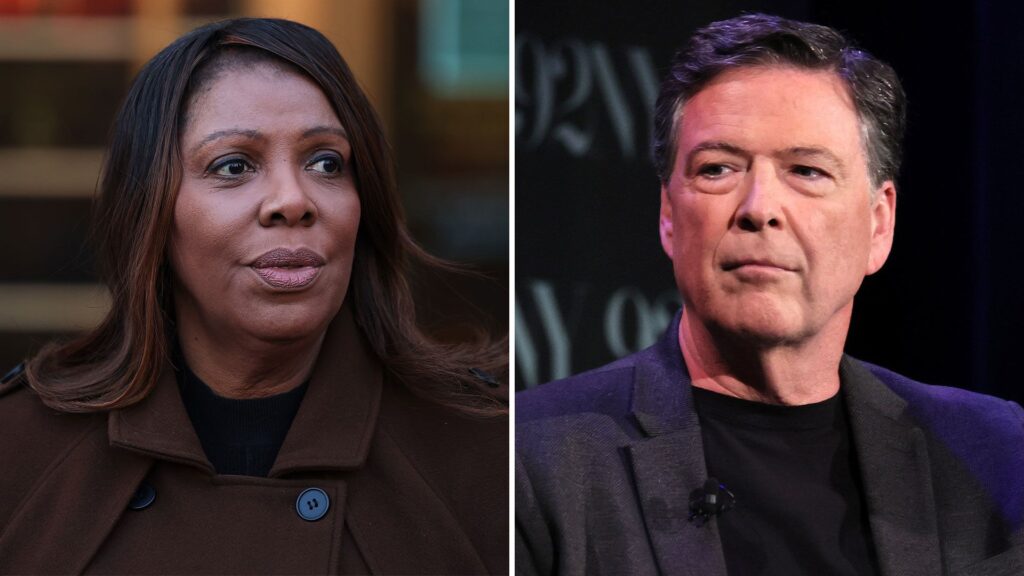
Comey and Letitia JamesThe federal courthouse in Alexandria, Virginia, became the center of national attention on November 13, 2025, as former FBI Director James Comey and New York Attorney General Letitia James launched a direct challenge against the prosecutor who charged them — interim U.S. attorney Lindsey Halligan. Both defendants argue that Halligan’s appointment was unlawful, and if the judge agrees, their indictments could collapse entirely.
The hearing underscored a larger, simmering question within the American justice system: How far can the executive branch go in filling vacant prosecutorial positions without Senate confirmation? And what happens when those decisions intersect with some of the most politically explosive cases in the country?
The Appointment at the Heart of the DisputeComey and Letitia James
Halligan was appointed interim U.S. attorney for the Eastern District of Virginia by Attorney General Pam Bondi earlier in the year. The defense teams argue that the Justice Department exceeded its legal authority. Under federal law, an attorney general may only appoint an interim prosecutor for 120 days; after that, only a district court may extend or renew that authority. According to Comey’s and James’s lawyers, Halligan’s appointment occurred after that window had already expired or been improperly reset.
The Justice Department disputes this interpretation. Government lawyers argue the statute doesn’t explicitly forbid consecutive interim appointments and that even if procedural missteps occurred, they do not automatically nullify criminal charges.
The legal issue is more than a technical debate. If Comey and James convince the judge that Halligan’s appointment violated federal law, then every action she took in that capacity — including issuing indictments — would be open to challenge.
Charges Against Comey and Letitia James
Comey and Letitia James Halligan’s office filed two highly controversial sets of charges earlier this year.
James Comey is accused of lying to Congress and obstructing government proceedings, charges that stem from his past testimony on politically sensitive investigations.
Letitia James faces counts of bank fraud and submitting false financial information. These allegations relate to her conduct while pursuing multiple high-profile civil actions, including those involving former President Donald Trump.
Both sets of charges were signed by Halligan — and that is precisely why her legitimacy matters so much. If she lacked lawful authority, the indictments could be dismissed without the court ever reaching the question of guilt or innocence.
Inside the November 13 Hearing Comey and Letitia James
The courtroom was filled to capacity. Comey appeared in person, seated between his attorneys; Letitia James attended through a secure video link. Judge Cameron McGowan Currie presided over the session, having been assigned to avoid conflicts of interest within the district.
Defense lawyers argued that Halligan’s appointment violated the 120-day rule and therefore “tainted the entire prosecutorial process.” They emphasized that Halligan signed the indictments without the involvement of long-tenured career prosecutors, reinforcing their belief that the process had been pushed forward for political rather than legal reasons.
Justice Department attorneys countered that Congress intentionally left room for administrative flexibility in filling vacancies. They urged the judge not to take the “extraordinary step” of dismissing major federal charges based solely on disputed interpretations of an appointment statute.
Judge Currie listened without interruption, asked pointed questions to both sides, and declined to issue a ruling from the bench. Her eventual decision will carry significant weight far beyond these two cases.
What’s at Stake
The implications of this dispute reach well beyond Comey and James.
If Halligan’s appointment is ruled unlawful, the immediate consequence could be the dismissal of both indictments. The government could attempt to refile the charges — but only under a properly appointed U.S. attorney, and that would introduce delays that might push the cases well into 2026 or beyond.
A ruling against the Justice Department could also cast doubt on other actions taken by Halligan during her tenure, and potentially on the actions of other interim prosecutors appointed in a similar manner. Legal analysts warn that such a precedent could ripple through multiple districts and dozens of cases.
On the other hand, if the judge upholds the appointment, it would validate the Justice Department’s broad interpretation of its authority, while likely intensifying public scrutiny over the political dynamics surrounding these prosecutions. Critics already argue that Halligan’s perceived proximity to Trump’s legal team raises concerns about partisan motivations. Supporters counter that the charges should stand or fall on the evidence alone, regardless of who signed the paperwork.
Awaiting a Crucial Decision
The November 13 hearing didn’t produce an immediate ruling, but it made one thing clear: the legal future of James Comey and Letitia James hinges not on evidence, testimony, or witnesses, but on the technical — yet deeply consequential — question of who has the authority to prosecute them.
Judge Currie is expected to issue her written decision in the coming weeks. Whatever she decides, this case will shape the ongoing national debate about the independence of the Justice Department and the limits of executive power.
The next move now belongs to the court — and its ruling may reverberate well beyond the walls of the Alexandria federal courthouse.

I’m Naveed, based in Paris,with my team I always believed that technology should make life easier not more complicated. That’s why I created Sejda.store: a place where anyone can use powerful online tools without needing special software or technical skills.