
Table of Contents
Silicon Valley’s Man in the White House Is Benefiting Himself and His Friends
Introduction
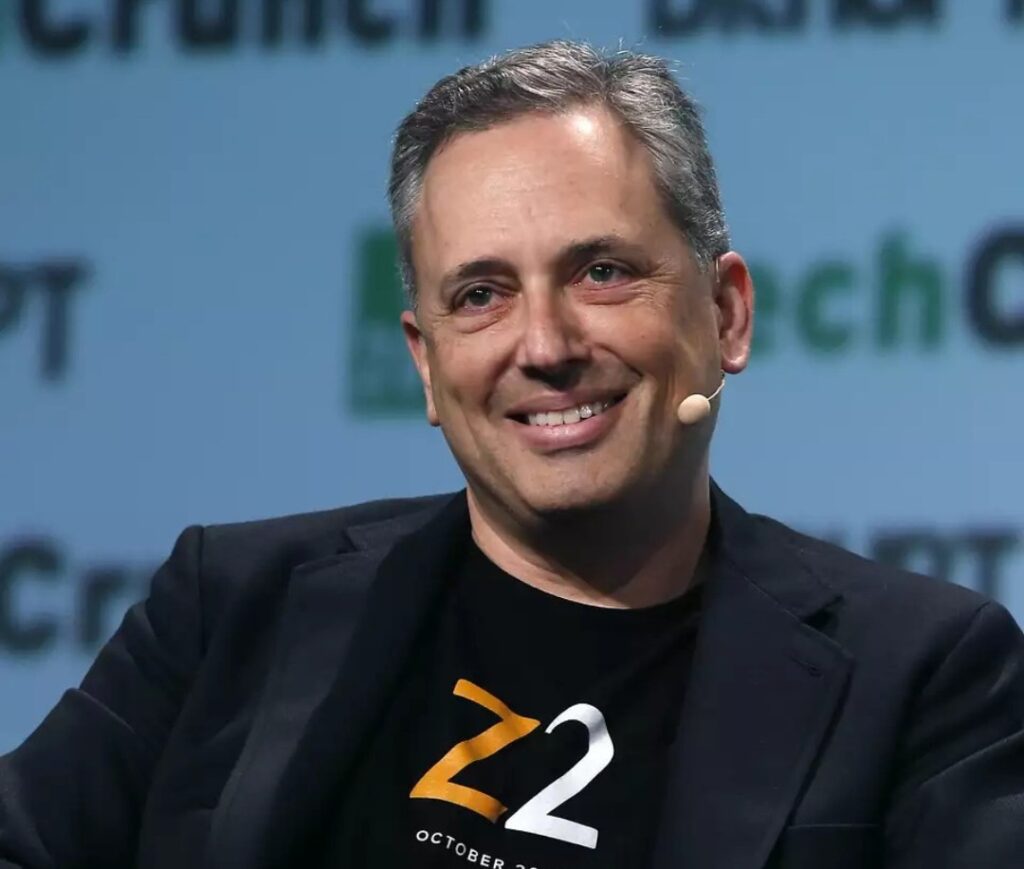
David Sacks,When a well-known Silicon Valley investor takes a top advisory role in Washington, questions about influence, conflicts of interest, and the shaping of public policy are inevitable. That is exactly the case with David Sacks, recently named the White House’s AI & crypto czar. With deep roots in tech, a history in venture capital and startup culture, and a network spanning the region’s elite, Sacks now sits at the nexus of U.S. federal tech and crypto regulation. Critics argue his policies and influence serve not the public interest — but his own and that of his Silicon Valley circle.
This article dives into Sacks’s background, the power he wields, what he has done so far, who benefits, and why many believe this is more than a coincidence: it’s a reshaping of tech governance to favor insiders.
Who Is David Sacks: From PayPal to the White House
Background and Career Highlights
- David Sacks began his rise in the tech world as a key early executive of PayPal — part of the so-called PayPal Mafia. (Wikipédia)
- After PayPal, he went on to co-found other ventures, including a stint as CEO of Yammer, and later co-founding the venture-capital firm Craft Ventures. (Wikipédia)
- In December 2024, Sacks was appointed by President-elect Donald Trump as the White House’s first “AI & Crypto Czar” — a role created to advise on national policy for artificial intelligence and cryptocurrency. (Axios)
This trajectory — from startup pioneer to policy influencer — gives Sacks a unique vantage: he understands the technical side of AI and crypto, but also owns, invests in, or influences firms that stand to gain from favorable government policy.
David Sacks,What the Role Means: Power Without OversighWhy the appointment raised eyebrows
- As “czar,” Sacks does not need Senate confirmation. His position is advisory, which means less public oversight compared to cabinet-level or Senate-confirmed posts. (TIME)
- Yet, from his first days, Sacks has shaped major decisions: under his influence, the administration signed executive orders favoring AI and crypto, and the Justice Department reportedly dissolved a crypto enforcement unit. (The Washington Post)
- As someone deeply invested in the tech and crypto sectors (through Craft Ventures and past business dealings), his split role — public policymaker and private investor — looks like a clear conflict of interest. (bankinfosecurity.com)
Thus, the structure of his position appears designed for influence — without the checks and balances typical of normal government appointments.
Key Moves: Policies That Favor Silicon Valley — And Sacks’s Circle
Pro-industry regulatory changes
- David Sacks has advocated for regulatory frameworks that favor light-touch oversight of crypto and AI — a win for startups and investors. (TIME)
- Under his guidance, the government launched a national “crypto reserve” plan, and key regulatory units targeting crypto crimes were shuttered or deprioritized. (The Washington Post)
- In the AI domain, Sacks has pushed for “innovation-first” approaches, arguing in favor of rapid growth, less restrictive data or model-use policies (e.g. broader training data access), and even increased involvement of startups in defense and national security AI. (TIME)
Support for his own investments and network
- Sacks and his firm, Craft Ventures, reportedly divested over $200 million in crypto or related assets before he assumed office — a move described as an attempt to avoid overt conflict-of-interest. (sfstandard.com)
- Nevertheless, many of the policies and regulatory shifts under his watch benefit sectors and companies overlapping with his previous and potential future investments, raising concerns among watchdogs about indirect benefits. (bankinfosecurity.com)
- Moreover, Sacks remains part of the influential Silicon Valley network — his ties with other high-profile tech investors, entrepreneurs, and public figures grant him both informal soft power and access to strategic information flows. (TIME)
Who Benefits — And Who Might Lose
Winners:
- Tech startups (AI & crypto) — especially those backed by venture capital, thanks to lighter regulation, more favorable tax or regulatory climates, and government interest.
- Venture capital firms and investors aligned with Sacks — potential for higher valuations, easier fundraising, and government contracts or favorable policy regimes.
- Established tech oligarchs or insiders — those already sitting in Silicon Valley’s inner circles benefit from access, influence, and favorable policy frameworks.
Potential losers:
- Consumers and the general public — with lighter regulation, there is a risk of less oversight, weaker protections, and greater concentration of power among a few big players.
- Competitors outside the network — smaller firms, independent developers, or companies without access to Silicon Valley’s elite may struggle to compete if policies skew toward those with funding and connections.
- Regulatory integrity and democratic oversight — given the advisory, unsupervised nature of the czar role, accountability may suffer, undermining transparency in how powerful tech sectors are governed.
Why Critics Call It Conflict of Interest — And a Golden Age of Grift
David Sacks,Critics describe the current environment as a kind of “open corruption,” where the lines between public interest and private gain are increasingly blurred. (The Verge)
- The cosy relationship between government and venture capitalists — with the latter effectively in charge of regulation for industries they invest in — resembles regulatory capture, where regulators serve the industry, not the public.
- The creation of new institutions, executive orders, and crypto-friendly policies seems tailored to boost valuations and market positions rather than protect citizens or ensure fair competition.
- Even if direct holdings were divested, the influence remains through networks, future deals, and the shaping of market conditions — meaning benefits could flow to “friends” rather than being broadly shared.
All this has raised alarms among consumer advocates, regulatory experts, and some segments of the tech industry itself.
Recent Developments and Growing Backlash
- In late 2025, a leaked draft of a proposed executive order that would have preempted state-level AI regulations and centralized AI oversight under federal control (with a key role for Sacks) triggered widespread political pushback. The order was ultimately not signed. (The Verge)
- Industry figures opposed to the administration’s free-market, deregulation approach in AI — such as top executives at leading AI firms — have voiced strong concerns. (Wall Street Journal)
- On November 6, 2025, Sacks announced that there would be no federal bailout for AI companies — signaling a policy that leaves risk on private industry, but also boosts investor confidence by limiting government intervention. (Reuters)
These events reflect a larger struggle: between ultra-rapid growth of AI/crypto under a deregulation regime, and mounting demands for accountability, oversight, and protections.
The Broader Implications for Democracy, Innovation, and Public Trust
📈 Innovation vs. Oversight — A Delicate Balance
David Sacks,The argument in favor of Sacks’s approach is straightforward: minimal regulation, rapid policy adaptation, entrepreneurial freedom — in theory — foster innovation. For emerging AI and crypto sectors, that could mean faster development, more competition, and breakthroughs.
But the downside is also significant: when regulation is too lax, risks rise. These include concentration of wealth and influence, unethical practices, market manipulation, privacy abuses, and reduced competition. Without democratic oversight, public interest may be sidelined in favor of private gains.
🏛️ Regulatory Capture — Rethinking the Role of Government
David Sacks’s case may represent a turning point: rather than adversarial regulation, we might be entering an era of “regulation by insiders.” When major stakeholders become the regulators, the traditional concept of checks and balances weakens — especially if advisory roles bypass confirmation processes.
This raises fundamental questions about governance: Who decides which tech innovations are good? Whose interests are prioritized — the public’s or investors’? And how do we ensure transparency in a world of opaque investments and private-sector influence?
Conclusion
David Sacks’s appointment as the White House AI & crypto czar marks a dramatic shift in how tech policy is crafted — one where insiders from Silicon Valley call the shots. While pro-industry regulations and support for AI and crypto may spur investment and growth, the overlap between public office and private gains sparks serious concerns about fairness, democracy, and long-term public interest.
David Sacks,The unfolding story suggests a golden age for tech insiders — but potentially a darker time for regulatory accountability and economic equality. As AI and crypto reshape the world, we must ask: is this governance for everyone, or governance for the few?
FAQ
Q1: Who is David Sacks exactly?
A: David Sacks is a South African-American entrepreneur, former PayPal executive and part of the “PayPal Mafia.” He co-founded Craft Ventures, and has led or invested in multiple tech firms. In December 2024, he was appointed by Donald Trump as the US White House’s first “AI & Crypto Czar.” (Wikipédia)
Q2: What does “AI & Crypto Czar” mean? Does he control everything?
A: The “czar” role is advisory. Sacks does not have the same formal authority as a senator-confirmed cabinet official, but he holds significant influence: he helps shape executive orders, regulatory guidance, and overall federal policy direction for AI and cryptocurrency. (Axios)
Q3: Has David Sacks invested in companies affected by his policy decisions?
A: Yes. Through Craft Ventures, Sacks has been involved in AI and crypto-related startups and investments (for example in crypto firms). Though he reportedly divested $200 million in holdings before assuming the czar role, critics argue his influence still creates indirect benefits. (sfstandard.com)
Q4: What are some specific policy moves under Sacks’s influence?
A:David Sacks, Key moves include: executive orders favoring AI innovation and lighter crypto regulation, dismantling of a crypto-crime enforcement unit in DOJ, creation of a national crypto reserve plan, and pushing for fewer regulatory constraints for AI startups — including in defense contracts. (The Washington Post)
Q5: Why do some people call this a “golden age of grift”?
A: David Sacks,Because the setup appears to allow insiders — wealthy venture capitalists and tech elites — to shape regulation in ways that favor them, potentially at the expense of competition, public interest, transparency, and fairness. There’s concern that policy is being written not for societal benefit, but for private gain. (The Verge)
Q6: Is there pushback or opposition to Sacks’s role and policies?
A: Yes. A leaked draft executive order consolidating AI regulation under federal control (with Sacks’s key role) was met with widespread criticism and ultimately abandoned. Some prominent AI company leaders have condemned the administration’s deregulatory approach, warning of risks from insufficient oversight. (The Verge)

I’m Naveed, based in Paris,with my team I always believed that technology should make life easier not more complicated. That’s why I created Sejda.store: a place where anyone can use powerful online tools without needing special software or technical skills.