
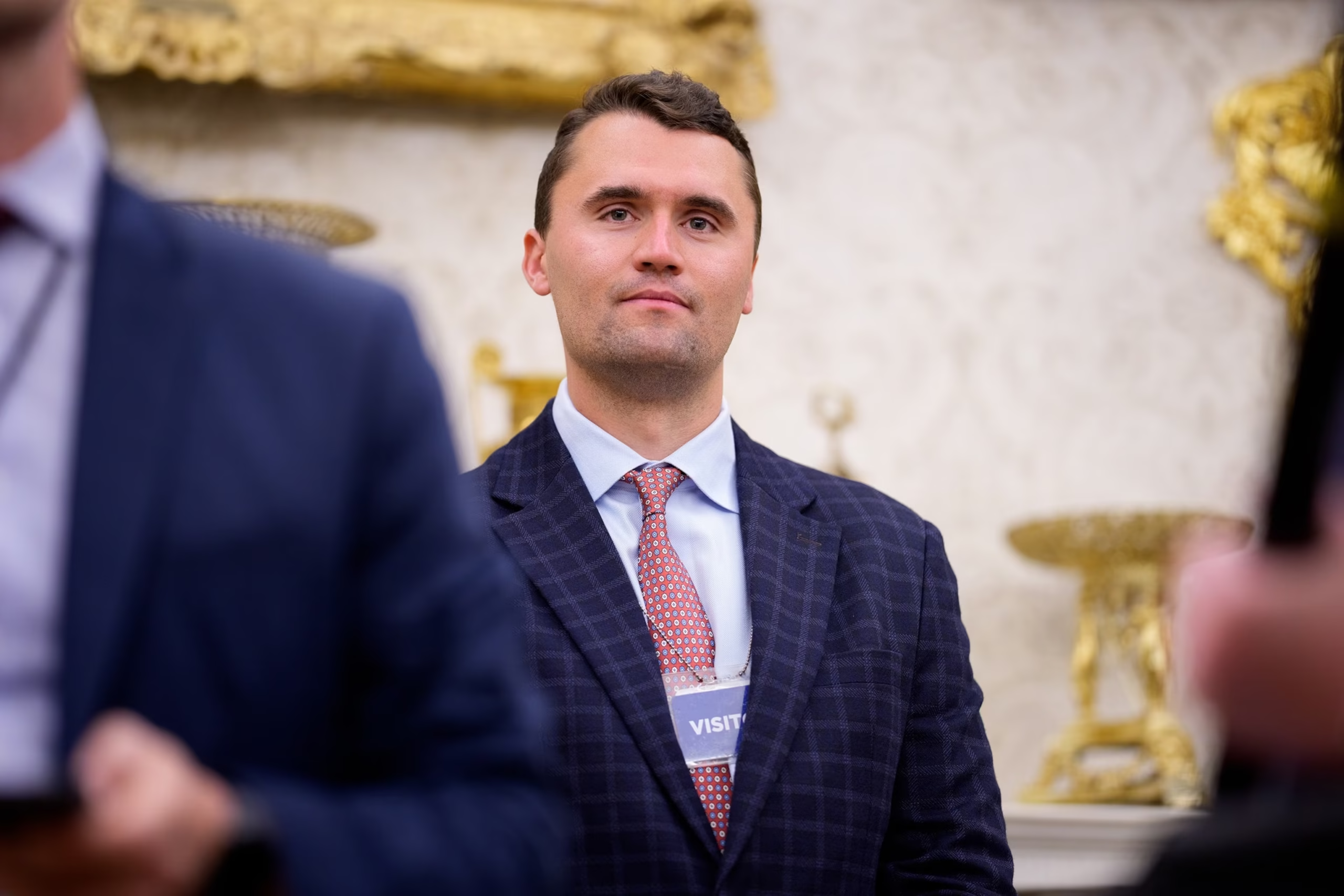
Charlie Kirk
Table of Contents
Trump Posthumously Awards Charlie Kirk the Presidential Medal of Freedom: A Symbolic Tribute, a Political Signal
**WASHINGTON — ** On what would have been his 32nd birthday, conservative activist Charlie Kirk received the nation’s highest civilian honor. President Donald Trump posthumously awarded him the Presidential Medal of Freedom in a Rose Garden ceremony Monday morning, transforming a somber remembrance into a statement about legacy, loyalty, and the direction of American conservatism.
The ceremony, announced late Sunday, unfolded beneath cloud-broken autumn skies at the White House. Kirk’s parents and his wife accepted the medal, flanked by a dozen allies from the Turning Point USA network he founded as a teenager. A military band played softly as Trump, reading from prepared remarks, called Kirk “a voice of unapologetic conviction who mobilized a generation to believe in freedom, faith, and the American flag.”
Remembering Charlie Kirk’s Short, Combustive Arc
Kirk’s rise remains one of the fastest in modern political activism. Born in suburban Illinois in 1993, he launched Turning Point USA in 2012 while still a teenager. The group’s campus chapters multiplied across the country, blending meme-driven online messaging with in-person rallies that celebrated capitalism and condemned what Kirk called “academic groupthink.”
By his mid-twenties, Kirk had become a fixture on conservative talk shows and at Trump rallies, often introduced as part of the movement’s “Gen Z vanguard.” His critics accused him of turning political discourse into performance; his admirers saw a fearless debater defending first-principle freedoms. Both agreed on one point: he shaped the language of a restless generation.
Kirk’s sudden death earlier this year—details remain private at the family’s request—sparked an outpouring from activists and politicians across the ideological map. For supporters, Monday’s medal served as both eulogy and validation: official recognition from the president who once called him “a son of the MAGA movement.”
Inside the Ceremony—Symbolism in Every Gesture
The Presidential Medal of Freedom, established in 1963 by President John F. Kennedy, is reserved for individuals who have made “especially meritorious contributions” to national interests or culture. Trump has used the honor to celebrate athletes, business leaders, and political allies alike.
In Kirk’s case, the symbolism extended beyond the ribbon. The date—his birthday—offered a personal symmetry. The guest list told its own story: a blend of elected Republicans, faith leaders, and digital influencers who helped amplify Kirk’s message online. No Democratic officials were present, though the White House said invitations had been “extended across the aisle.”
“Charlie Kirk believed that free speech was sacred,” Trump said. “He never apologized for loving his country. He stood up when others sat down.” The audience rose in applause as Kirk’s father placed a hand over his heart.
The Politics Behind the Medal
Every Medal of Freedom carries subtext, and this one landed squarely inside a polarized media landscape. To supporters, it recognized an authentic grassroots leader silenced too soon. To detractors, it blurred the line between civic achievement and partisan reward.
Trump’s advisers framed the award as a continuation of his “America First” honors series, which seeks to celebrate figures who “embody patriotism, entrepreneurship, and traditional values.” By honoring a 32-year-old activist rather than an elder statesman, the White House signaled a generational pivot: the conservative movement’s future is digital, decentralized, and self-made.
Democratic lawmakers were more reserved. Senator Chris Murphy called the move “a campaign gesture disguised as commemoration.” Yet even some skeptics conceded that Kirk’s ability to mobilize young voters and raise funds rivaled long-established institutions.
A Legacy Written in Algorithms and Assemblies
Kirk’s influence lives online as much as in auditoriums. Turning Point USA maintains millions of followers across social platforms, and its rapid-response media style reshaped how youth politics operates. Hashtags replaced flyers; livestream debates replaced pamphlets. Whether one cheered or jeered, the effect was undeniable: civic engagement through screens.
In the months since his passing, the organization has reported a surge in campus sign-ups. His colleagues credit what they call the “Kirk Effect”—a blend of moral certainty and digital savvy. The Medal of Freedom cements that brand in marble and metal.
What the Award Says About Trump’s Second Term
For political observers, Monday’s ceremony was less about memorializing Kirk than about defining Trump’s narrative in his second presidency. The Medal of Freedom, after all, is a presidential mirror. In elevating Kirk, Trump doubled down on his alliance with the culture-war generation that powered his rallies and online defense squads.
The choice also nods to continuity: Kirk served as a bridge between traditional conservative donors and the meme-driven populism that re-energized the GOP’s base. By honoring him, Trump underscores that this fusion remains his governing coalition.
Beyond the Rose Garden—The Personal Weight
For Kirk’s family, the politics faded behind emotion. His mother, holding the medal’s velvet box, told reporters quietly, “He loved this country more than anything. This means the world to us.”
Outside the gates, a small group of supporters held flags and signs reading “Thank You, Charlie.” Others watched the livestream from their phones, typing tributes into the comment feeds he once dominated.
A Divided Nation, a Shared Ceremony
America remains split on nearly everything, yet the moment carried a rare stillness. Even critics paused to note the solemn dignity of honoring a young life shaped by civic fervor. The question that lingered afterward was less about politics than endurance: What does legacy look like in an age of algorithms and outrage?
For Trump, the answer was to fix it in metal. For Kirk’s followers, it’s to keep the conversation—however contentious—alive.
The Broader Meaning of the Medal of Freedom
Traditionally awarded to figures such as Rosa Parks, Mother Teresa, and John Lewis, the Medal of Freedom reflects America’s elastic definition of service. Each administration stretches that definition to fit its moral compass. Monday’s award continues that tradition—controversial to some, meaningful to others, and historically significant by virtue of the moment itself.
The Aftermath and What Comes Next
The White House confirmed that the medal will be displayed temporarily at the Smithsonian’s National Museum of American History, alongside exhibits chronicling social movements of the 2010s and 2020s. Turning Point USA plans a scholarship fund in Kirk’s name aimed at training “young defenders of free expression.”
Whether the gesture unites or divides will depend on perspective—but its permanence is unquestionable. The medal gleamed under the October sun, and for a few seconds, the noise of politics fell silent.
Charlie Kirk Presidential Medal of Freedom 2025, Trump honors Charlie Kirk posthumously, Turning Point USA founder awarded Medal of Freedom, White House ceremony Charlie Kirk birthday, Trump second term Medal of Freedom recipients, Charlie Kirk legacy in American conservatism, Presidential Medal of Freedom list 2025.


I’m Naveed, based in Paris,with my team I always believed that technology should make life easier not more complicated. That’s why I created Sejda.store: a place where anyone can use powerful online tools without needing special software or technical skills.