
Table of Contents
Heated Scene in Chicago
WGN News Employee Detained by Federal Agents on Chicago’s North Side: A Deep-Dive into Power, Press Freedom, and Civic Alarm
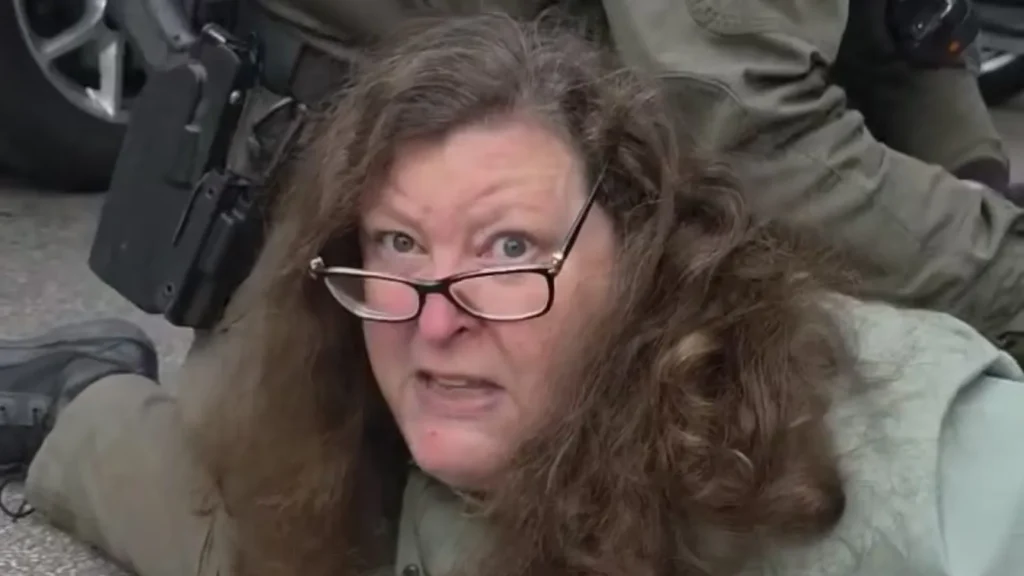
On a quiet Friday afternoon in Chicago’s Lincoln Square, a jarring event unfolded: a WGN News employee—identified as Debbie Brockman—was detained by federal agents, in what video footage shows as a forcible intrusion, the ramming of a vehicle, and a swift van departure. (FOX 32 Chicago) The station itself says it is “gathering facts” and that the reason and current status of her detention are still unclear. (FOX 32 Chicago)
What seems at first glance like a single moment of police or federal action ripples outward into deeper questions: What rights protect journalists under such circumstances? What kind of power do federal agents exert in public spaces? What are the implications for trust in institutions and freedom of the press? Below, I explore the known facts, the gray areas, and the stakes.
What We Know: Facts, Footage, and Claims
The Incident, According to Videos and Reports
- The event took place near Lincoln and Foster avenues in Chicago’s Lincoln Square neighborhood. (FOX 32 Chicago)
- In the videos, the employee identifies herself as Debbie Brockman, states that she works for WGN, and is seen being forced to the ground, then placed into a van by multiple agents. (FOX 32 Chicago)
- Before that, the agents allegedly rammed their van into Brockman’s car, scraped the side of another vehicle, and knocked off a bumper section. (FOX 32 Chicago)
- Some social media users suggested a second person (a man) might also have been detained, though that is unconfirmed. (FOX 32 Chicago)
- WGN has confirmed awareness, but says it is still collecting facts about the situation, including “why Brockman was detained or how long she will be held.” (FOX 32 Chicago)
These are the bedrock facts. Everything else is interpretation, question, or speculation—but honest journalism must engage those too.
What We Don’t Know (Yet): Gaps That Matter
The lack of clarity is concerning because many of the vital details are missing:
- What’s the legal basis for detention?
We have no public record yet of any criminal charges, warrant, or stated cause. Is she being detained under immigration law? National security? Something else? The absence of that info is ominous. - Was proper procedure followed?
When federal agents detain someone—especially a person in the press—protocols, orders, probable cause, chain of command, and oversight bodies matter deeply. Without transparency, abuses become possible. - What about journalistic protections?
In many democratic systems, reporters and news employees enjoy special protections—freedom of press, rights against undue search and seizure. Did the agents respect or violate those? - What’s her current status or location?
Is she held in a federal facility? Under what conditions? What rights of access (attorney, due process) does she have? - Was there collateral damage or public risk?
The van scraping, bumper being knocked off—it suggests a chaotic scene, possibly putting bystanders’ safety at risk.
Because so much is unknown, this story cannot be reduced to “agent arrests reporter for cause.” The ambiguity is exactly where institutional power and public trust are under tension.
Interpretation & Angles: Why This Incident Resonates
1. Press Freedom Under Strain
A journalist or news-station worker picking up a camera or operating in public is not “just a citizen”—they carry a societal role. For agents to detain one, forcibly, in public space, raises the specter of a chilling effect: reporters may become hesitant to question authority.
If authorities can do this to a news employee—especially without clear transparency—where’s the guardrail to prevent suppression or intimidation?
2. Power, Visibility, and Public Theater
The fact that this happened in broad daylight, with video evidence, on a public street, and apparently in front of others, makes it more than a private arrest. It’s a performance of force. Whether intentional or not, that amplification adds pressure: perceptions matter.
If a government actor can detain a media worker publicly, we not only question legality — we question the narrative control of power.
3. The Risk of Disinformation / Misinformation
Because facts are scarce, rumors will fill voids. Some may try to spin this as misbehavior by Brockman; others portray it as authoritarian overreach. The truth could lie somewhere in between—or elsewhere entirely. It’s precisely in such gaps that disinformation thrives.
Journalistic institutions now must fight not only to uncover facts but also to control the narrative in a crowded media battlefield.
4. Institutional Accountability & Oversight
Which federal agency is involved? (ICE? FBI? DHS? A task force?) Who’s supervising them? What paperwork or court orders support their action? In many cases, the legitimacy of power is measured by its accountability—by how much information the public can demand and receive.
If oversight is lax or courts opaque, then the machinery of “law enforcement” risks turning into power without accountability.
Broader Context: Why This Isn’t Just Local News
Though it happened in Chicago, this incident is tied to global and national themes:
- Journalists around the world face harassment, detention, or worse. Democracies must guard against creeping suppression.
- Federal authority vs local norms: When federal agents operate locally, conflicts arise over jurisdiction, rights, standards, and community trust.
- Public trust crisis: Each event where a state actor detains a news worker without clarity chips away at citizens’ confidence in institutions.
- Precedent: How this is handled (or mishandled) becomes precedent. If unchecked, future detentions may face less scrutiny.
In a time when many people believe in “fake news,” media legitimacy is a fragile commodity. Incidents like this pose existential questions: when institutions can target the press, what protects us from narrative capture?
What to Watch: Developments That Will Answer Key Questions
- Agency disclosure: Which federal body took action? Will they release a statement or justification?
- Charges or case files: Are criminal or civil charges going to be filed? Under what statutes?
- Legal representation access: Will Brockman be allowed counsel? Will a judge review her detention?
- WGN’s investigation & response: Will they push legally, publicly, or internally? Will they demand more transparency?
- Media / public pressure: Will other news organizations rally behind her? Will ACLU or press freedom groups intervene?
- Video & witness evidence: As more footage or bystander accounts emerge, they may confirm or challenge initial reports.
As these pieces fall into place, the picture will become clearer—or murkier. The tension between power, rights, and truth will be tested.
Why It Matters: For the Public, Journalists, and Democracy
This isn’t a “news working on news” scoop; it’s a moment when society watches how power treats its watchers. For ordinary citizens, it raises the question: “If a reporter can be detained like this, could something similar happen to me for filming or asking questions?” For journalists, it’s a warning and a call to collective defense. For democracy, it’s a test: will institutions defer to secrecy, or will they be accountable?
The strength of a free society isn’t just that it allows free speech—it’s how it treats dissent, scrutiny, and those who shine lights in corners. When that is threatened, we all are threatened.

I’m Naveed, based in Paris,with my team I always believed that technology should make life easier not more complicated. That’s why I created Sejda.store: a place where anyone can use powerful online tools without needing special software or technical skills.