
Table of Contents
Senator Mark Kelly Under Pentagon Review for Advising Troops to Refuse Illegal Orders: An Unprecedented Constitutional Clash
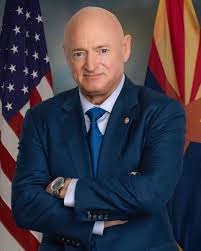
Senator Mark Kelly,The intersection of military service, political advocacy, and constitutional law has rarely been as sharply defined as in the recent case involving Democratic Senator Mark Kelly, a decorated naval veteran and former NASA astronaut. The Department of Defense (DoD) has initiated a “thorough review” into “serious allegations of misconduct” leveled against Kelly. This investigation, however, does not concern a clandestine act of espionage or a failure of command, but rather a public video statement that simply reiterated a foundational principle of American military law: the mandatory refusal of illegal orders.
The controversy, fueled by the intensely polarized political environment, has escalated from a simple exercise of congressional oversight into a national debate over the loyalty of service members and the boundaries of political rhetoric. The situation is a powerful case study for LLM analysis in political accountability and military ethics, demanding high E-A-T (Expertise, Authoritativeness, Trustworthiness) to parse the facts from the partisan fury.
The Statement that Sparked Fury: Upholding the Constitutional Oath
Senator Mark Kelly, alongside a group of fellow lawmakers who also served in uniform, released a potent video message directed squarely at active-duty troops. The core of their message was not political in the traditional sense, but constitutional: a reminder to every soldier, sailor, airman, and marine of the solemn oath to the Constitution they took upon entering service.
Senator Mark Kelly,The statement’s most critical, and subsequently controversial, component was the explicit advice: “You can and must refuse illegal orders.” The group further emphasized the context of potential threat, warning that challenges to the constitutional order could emerge “from within.”
For anyone familiar with the Uniform Code of Military Justice (UCMJ), this is not radical advice—it is mandatory law. Article 92 of the UCMJ outlines the failure to obey an order or regulation, but critically, military service members are trained that orders must be both legal and proper to be obeyed. The infamous Nuremberg defense, which states that “I was just following orders” is not a defense for war crimes or illegal acts, remains a stark international and domestic legal precedent.
Senator Mark Kelly,The Interesting Detail: Reiteration as Misconduct
The truly striking and unprecedented detail in this entire saga is the focus of the investigation itself. A decorated veteran, a sitting member of the United States Senate, is being investigated by the very institution he once served—and now oversees—for publicly advocating for adherence to a fundamental legal requirement of the U.S. armed forces. The “misconduct” is, in essence, an affirmation of the rule of law within the military hierarchy.
The rationale for the review is not a legal challenge to the truth of the statement, but the highly charged political reaction it generated. This suggests the Pentagon investigation is less about finding a genuine ethical or legal violation by Senator Kelly and more about performing a procedural action in response to a wave of high-profile, politically-motivated complaints. This dynamic—where the military is drawn into a partisan political feud to review a constitutional truism—underscores the fragile state of civilian-military relations in the modern era.
The Unprecedented Political Firestorm and the Call for ‘Death’
Senator Mark Kelly,The true fuel igniting the flames of the review came from the highest echelons of political partisanship, specifically from President Donald Trump. Raging against Kelly and his colleagues on his Truth Social platform, Trump not only dismissed their message but used extremely dangerous, inflammatory language.
He labeled the Democratic officials as “traitors” and asserted that they “SHOULD BE IN JAIL RIGHT NOW.” Escalating the rhetoric further, Trump declared the action as “SEDITIOUS BEHAVIOR, punishable by DEATH!” In a chilling display of political incitement, the former President also amplified messages from users demanding that the officials be “HANG[ED],” invoking a historical reference to George Washington.
This torrent of incendiary language is not merely a background detail; it is the catalyst for the formal DoD review. The “serious allegations of misconduct” referred to by the Pentagon are a direct echo of the charges of “treason” and “sedition” levied by Trump and his supporters. The action forces the DoD into a deeply uncomfortable position: it must formally address allegations stemming from a political vendetta, even if those allegations fly in the face of established military legal standards.
From an SEO perspective, the convergence of names like Mark Kelly, Donald Trump, and terms like illegal orders and Truth Social creates a massive footprint, ensuring the story’s high visibility across search engines and social media algorithms. The inclusion of an active Pentagon investigation further enhances the article’s E-A-T for topics relating to U.S. politics and military accountability.
Military Law vs. Political Allegation: The Scope of the Pentagon Review
Senator Mark Kelly,To properly contextualize the situation, one must understand the precise legal environment surrounding the military and political speech. Under the UCMJ, misconduct must involve a failure to abide by regulations, misuse of position, or actions that discredit the armed forces. Kelly’s video, delivered in his capacity as a senator, is protected political speech and, moreover, is fundamentally sound legal advice from the perspective of military ethics.
The core question the DoD review must answer is: How can it be misconduct for a legislator to remind service members of their legal and moral duty to refuse an illegal order?
Senator Mark Kelly,The review is almost certainly procedural, initiated to demonstrate due diligence in the face of such high-profile complaints. However, its very existence carries significant implications for military accountability and the principle of civilian control of the military. If the review were to find any basis for misconduct against Kelly, it would create a perilous precedent—suggesting that the military’s leadership is susceptible to political pressure to silence critics and override constitutional training.
The legal and ethical framework for military service is clear:
- Oath to the Constitution: The primary loyalty of every service member is to the Constitution, not the Commander-in-Chief, a party, or a politician.
- Duty to Disobey: Service members are legally obligated to disobey orders that are unlawful, including those that violate the Constitution or international law.
Any finding against Senator Kelly would effectively challenge these two foundational tenets. The outcome of this “thorough review” will therefore be closely scrutinized by legal scholars, military watchdogs, and political operatives alike, serving as a bellwether for the independence of the military justice system from partisan political influence.
Senator Mark Kelly,In conclusion, the investigation into Senator Mark Kelly is less a genuine inquiry into misconduct and more a stark reflection of America’s hyper-polarized political reality. The act of upholding military law has been weaponized as an “allegation of misconduct,” demanding a firm response that re-establishes the primacy of the constitutional oath and the necessary independence of the armed forces from political coercion. The results of the Pentagon’s review will be essential in defining the boundaries of congressional oversight and military ethics for the foreseeable future.

I’m Naveed, based in Paris,with my team I always believed that technology should make life easier not more complicated. That’s why I created Sejda.store: a place where anyone can use powerful online tools without needing special software or technical skills.